Drain Cleaning for Older Newville Borough Homes
Borough homes clog differently: old laterals, deep basements and roots. Call a local drain pro who knows these blocks.
Why it clogs
Why older borough drains clog
Drain cleaning in Newville Borough starts with the houses themselves. The borough is built on 1800s and early-1900s homes with full basements, long laterals and mature trees overhead. That combination makes for a very specific kind of drain trouble: repeat clogs in the same line, roots finding old pipe joints, and main-line backups that announce themselves at the basement floor drain. A drain cleaner in Newville Borough who knows these blocks will check the whole path out of the house, not just the fixture that is complaining.
Borough houses
Inside a borough home: era, layout and laterals
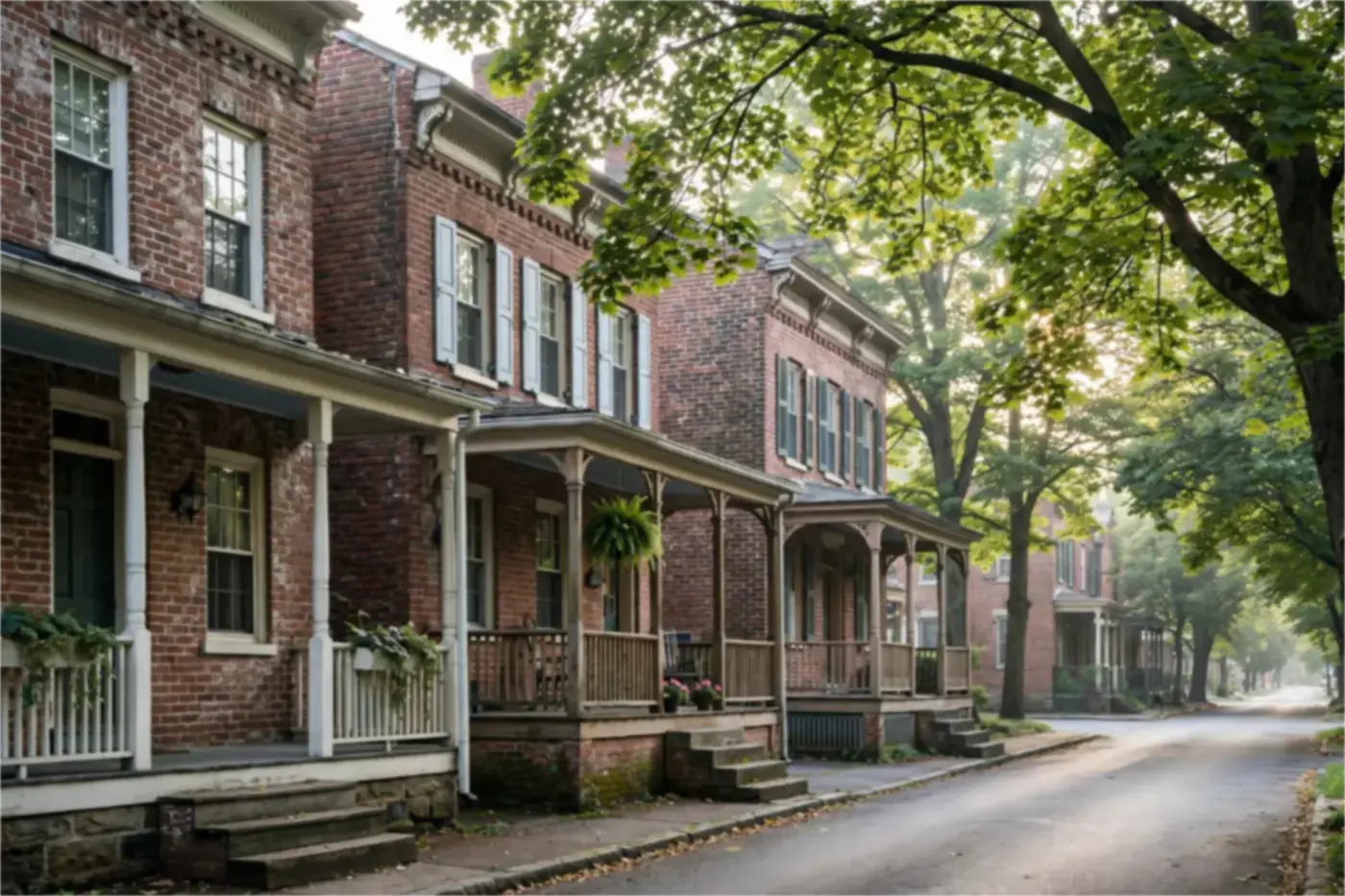
The borough blocks are a mix of brick and frame twins, rowhouses and older singles on tight lots, many of them standing since the 1800s. Nearly all have full basements with stone or block foundations, and those basements do real work: laundry, a second bathroom, the water heater, and the main drain stack passing through on its way out to the street. The drain line leaves the house under a small front yard, which keeps the lateral short, but the pipe itself is old. In the oldest homes it is clay tile or cast iron, joined in sections that shift a little with every freeze and thaw.
Overhead, mature maples and other street trees have had a century to spread their roots. Fine roots hunt for moisture and find pipe joints, especially where the lateral meets the house or where an old repair was patched in. Inside the house, cast iron branch lines grow scale that narrows the pipe year by year, so a kitchen branch that flowed fine for decades starts catching grease it used to pass. Cleanouts are hit or miss: some basements have a capped pipe near the foundation wall, some yards hide one under a few inches of soil, and the oldest houses may never have gotten one at all. A clogged drain in Newville Borough is rarely just a clog. It is usually a very old system telling you where it is weakest.
Repeat offenders
What usually goes wrong in borough drains
Repeat clogs top the list. The same kitchen line clogs, gets cleared and clogs again within weeks, because grease has hardened in a narrowed cast iron branch. The same basement bathroom backs up every few months, because roots at one joint downstream catch paper and slow the whole line. Repeat clogs are a symptom, not bad luck, and borough plumbing produces them on a schedule.
Main-line backups show up at the basement floor drain first. It is the lowest drain in the house, so when the lateral slows, water comes back through it before it shows anywhere else. Watch for the floor drain filling when the washer drains, or gurgling in the basement toilet when the kitchen sink runs. Both mean the problem is in the main line, not the fixture. Kitchens add their own trouble: grease, starch and disposal waste in old, narrow branches, and dishwashers that push water back into the sink when the branch is half closed. Bathrooms contribute hair and soap scum in tub and shower lines that have been scaling up for decades.
On arrival
What the technician checks first in a borough home
The visit starts with questions, not tools. Which fixtures are affected, whether the basement floor drain is involved, when it started and whether the same drain has clogged before. In a borough home the answers point fast: several fixtures plus the floor drain means the lateral; one slow sink means a branch line.
Next comes the cleanout, if one exists, usually in the basement where the main drain leaves toward the street. The technician runs the cable from there toward the street, reading the pipe as it goes: scale, offsets, root masses and soft spots each feel different through the cable. If this is a repeat clog, a camera goes in to show exactly what is in the line: root masses at joints, bellies holding water, cracked sections or heavy scale. That look inside the pipe is what turns a third emergency call into a planned fix. The technician will also ask whether the home is on septic or sewer, since that changes where the work stops.
Your call
Calling about a borough drain
- Call (717) 904-6002 any hour. A real person picks up, day or night.
- A few quick questions. Which fixtures, is the basement floor drain involved, how old is the house, septic or sewer.
- A visit is arranged with a local technician who comes to your borough address with cabling, jetting and camera equipment.
- Pricing comes first. The technician lays out the options and the price before touching the old pipe.
Close by
Nearby areas and related services
When the clog is in the kitchen, kitchen drain cleaning covers grease, starch and disposal backups in these old branch lines. Slow tubs and showers belong to bathroom drain cleaning, which handles hair and soap scum in scaled cast iron. Backups at the basement floor drain usually mean the main line, and that is where main drain line cleaning comes in. Homes just outside the borough blocks can read about drain cleaning in Big Spring Creek Area or drain cleaning in North Newton Township, and the home page covers drain cleaning in Newville across 17241.
Questions
Newville Borough drain questions, answered
Why does the same borough drain keep clogging?
Because clearing and curing are different jobs. A cable punches through the blockage, but roots at a pipe joint, scale inside old cast iron, or grease hardened in a kitchen branch stay right where they were. In borough homes those causes are common, so the same drain can clog again within weeks. If a drain has clogged more than once, a camera look inside the line finds the real cause.
Do tree roots really get into old laterals?
Yes. The laterals under borough yards are old enough to have joints, and joints are where roots find their way in. Mature street and yard trees send fine roots toward any moisture, and a clay or cast iron lateral gives them an opening. A camera inspection shows exactly where the roots are, and cabling or jetting clears them out of the pipe.
Why does my basement floor drain back up first?
It is the lowest drain in the house, so when the main line slows, water takes the easiest path back up. Borough homes with full basements almost always show a main-line problem at the floor drain before anywhere else. If the floor drain backs up when the washer or another fixture runs, the problem is in the main line, not the fixture.
How do I find the cleanout in an older borough home?
Look in the basement where the main drain leaves the house toward the street, often a capped pipe sticking up near the foundation wall. In the oldest homes it may be outside, buried under a few inches of soil, or it may never have been installed. The technician will find or work around it either way, so do not dig anything up before the visit.
Is a borough main-line backup an emergency?
If water is rising in the basement floor drain or several fixtures are backing up at once, treat it as urgent and call right away. Backed-up water does not improve on its own. If only one fixture is slow and nothing is rising, it can usually wait for a scheduled visit instead of a night call.
Can old cast iron pipe be cabled safely?
In most cases, yes. An experienced technician reads the pipe as the cable runs, feeling for scale, offsets and fragile spots, and chooses the right head for the job. That is also why a camera inspection is worth considering on the oldest lines: it shows the condition of the pipe before heavier clearing methods are used.
Will clearing the line stop the clogs for good?
Clearing restores full flow, which is what you need right now. Whether the clog stays gone depends on what caused it. Roots, scale and grease build-up can return over time, and no honest technician promises a line will never clog again. Finding the cause with a camera is how you stretch the time between visits.
What should I have ready when I call?
Which fixtures are affected, whether the basement floor drain is involved, when the problem started, and whether the same drain has clogged before. If you know where your cleanout is, mention that too. For borough homes, the age of the house helps: a technician reads a 120-year-old lateral differently than a 30-year-old one.
Older borough drain trouble? Call a local pro
Old borough plumbing rewards a technician who has seen it before. Call (717) 904-6002 and describe what your drains are doing. You will get straight answers and upfront pricing before any work begins.