Main Drain Line Cleaning in Newville
Several drains backing up at once? Local pros clear the main line. Calls answered 24/7.
Serving 17241. Calls answered 24/7.
At a glance
- Main drain line cleaning in Newville, PA for homes where several drains back up together.
- Worked through the cleanout: cabling, root cutting and hydro jetting.
- Calls answered 24/7, with pricing explained before any cable goes in.
When several drains in the house back up at the same time, the problem is almost never in one fixture. It is the main drain line: the single pipe every fixture in the house drains into. If you need main drain line cleaning in Newville, this page explains how to recognize it, what the technician does, and what to do right now.
Main lines here range from root-choked laterals under borough basements to long septic runs on township farms. The independent tech you are matched with clears main lines as daily work and starts by finding the cleanout.
Call (717) 904-6002 any time. The line is answered 24/7 and you get upfront pricing before work.
Multiple Drains Backing Up? Signs It Is the Main Line
The signature of a main line blockage is a pattern, not a single symptom. The tub gurgles when the toilet flushes. The shower backs up when the washing machine drains. Water rises in the lowest drain in the house, usually the basement floor drain. Any one of these alone might be coincidence; two or more together point straight at the main line.
A main sewer line clog behaves differently from a branch clog. Branch clogs are slow and local: one sink, one tub. A main line restriction affects the whole house at once because everything drains through it. That is why plunging one fixture never fixes it, and why the fix has to happen at the shared line.
Seeing two or more of these signs? Get a straight answer by phone and describe the pattern to a local drain pro.
The Cleanout: Where It Usually Is in Newville Homes
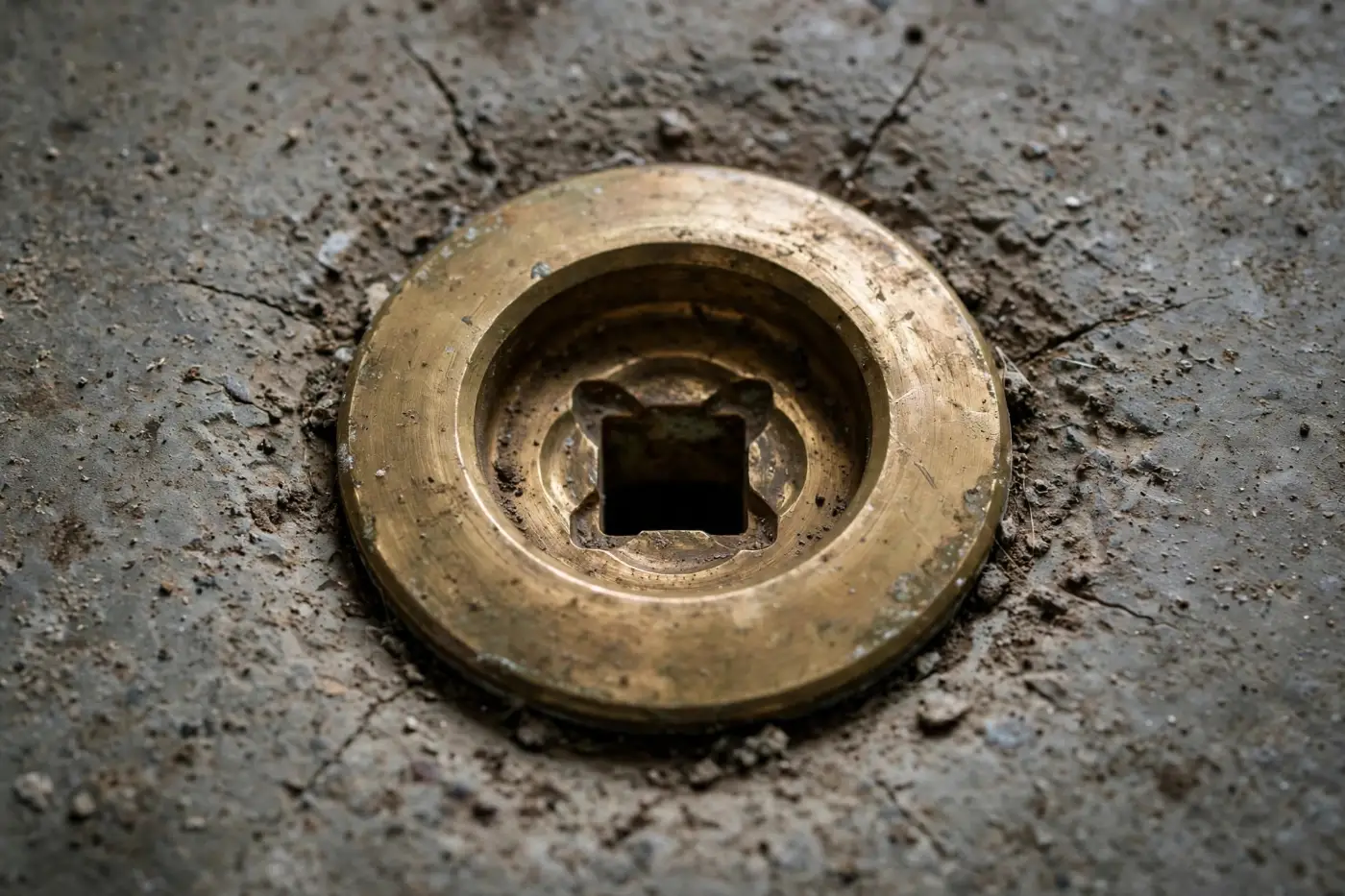
The cleanout is the capped pipe that gives the tech direct access to the main line, and the whole visit goes easier when it is found fast. In borough homes with basements, it is usually on the main drain where the pipe leaves the basement wall or comes up through the floor. Look for a round cap, often with a square or hex fitting on top.
In slab and crawlspace homes common in the townships, the cleanout is often outside: a short pipe with a cap sticking up near the foundation, sometimes half-buried in mulch or grass. On septic homes, there may be a second cleanout on the run to the tank. Knowing your home type helps the dispatcher guide you to it before the tech arrives.
Main Line Drain Cleaning: Cabling the Main Line
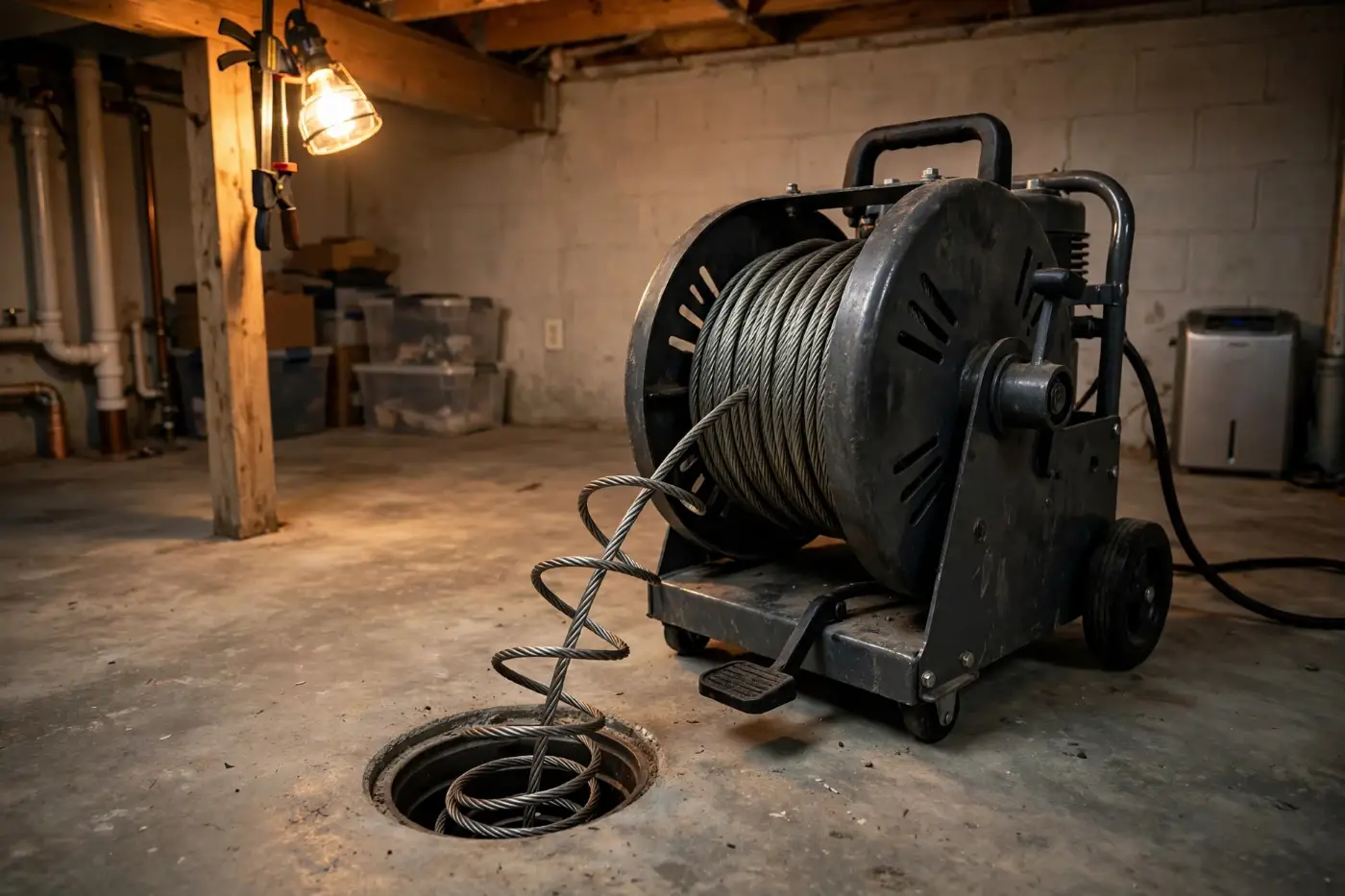
Cabling is the standard way a main line gets cleared. The tech opens the cleanout, feeds a steel cable with a cutting head into the line, and works it through the blockage. The head breaks up grease, wipes out root masses and pulls back the debris so the tech can see what came out of your line.
The cable goes in sections until it reaches the far end of the blockage, then the tech runs water to flush the loosened material through. You will know it worked because every fixture in the house starts draining normally again at the same time. One visit, one line, whole house draining.
Sewer Line Tree Roots and Older Pipe in Newville
In borough homes, old clay and cast iron lines meet mature trees, and roots find every joint. Roots enter through tiny separations and grow into a mass that catches everything passing through. This is the most common cause of repeat main line clogs in older Newville neighborhoods.
Roots are cleared from inside the line: a root-cutting cable head first, then hydro jetting to scour the remaining mass from the pipe walls. What the tools cannot do is make the joints root-proof again, so a camera look after the clearing shows how much of the problem is roots and how much is the pipe itself.
When a Drain Camera Inspection Is the Next Step
Cabling clears the clog, but it does not show why it formed. When the same main line blocks again, or the tech pulls back roots and scale, a drain camera inspection is the honest next step. The camera rides the line and shows roots, bellies, offsets, cracks and buildup on a screen you can watch.
The inspection also locates the problem: the tech can mark the spot above ground so you know exactly where the trouble sits. For homeowners on septic, the camera confirms whether the blockage is in the house line or the run to the tank, which changes the plan completely.
One Fixture Vs Main Line: How the Signs Compare
| One-fixture signs | Main line signs |
|---|---|
| Only the kitchen sink is slow; everything else is fine | Several fixtures back up at the same time |
| The tub drains slowly but the toilet flushes normally | The tub gurgles every time the toilet flushes |
| Hair or food visible at the drain opening | Water rises in the basement floor drain |
| The problem builds slowly over weeks | The problem appeared suddenly across the house |
| Plunging the fixture helps, even briefly | Plunging one fixture changes nothing |
Main Sewer Line Cleaning for Newville Homes
In Newville Borough, 1800s and early-1900s homes run old laterals to the street, and those clay and cast iron lines have been collecting roots and scale for a century. Basements put the cleanout within easy reach, but the old pipe means repeat clogs are common until the underlying cause is found.
In North Newton Township, homes are newer and many sit on septic. A main line clog here can sit in the house line or in the long run to the tank, and clearing only helps if the tech works the right section. Read about drain cleaning in North Newton Township for how the tech sorts that out. Septic rule always applies: drain clearing to the tank only, never septic work.
Homes near Big Spring Creek often have basement floor drains that act as the early warning system: they back up first because they are the lowest opening. Our notes on drain cleaning in Big Spring Creek Area cover the creek-side pattern, where moisture and lower-lying lines join the usual suspects.
A whole-house backup will not wait. Call about a main line backup and describe which drains are affected.
While You Wait: Safe Steps for a Main Line Backup
- Stop using water in the house. Every flush and every load of laundry adds to water that cannot drain.
- Keep children and pets away from any backed-up water, and do not try to bail it with household tools.
- Do not pour chemical drain cleaner down any drain. It will not reach a main line clog and it makes the line unsafe for the technician. We never recommend chemical drain cleaners.
- Move valuables away from the basement floor drain, the lowest opening and usually the first to back up.
- Note which fixtures are affected and in what order it started. That pattern is the fastest clue for the dispatcher. Need someone now? Call now and describe the backup.
FAQ
Main Drain Line Cleaning Questions from Newville Homes
How do I know if my main drain is clogged?
The signature is several fixtures acting up at once: the tub gurgles when the toilet flushes, the shower backs up when the washer drains, or water rises in the lowest drain in the house. A main drain line cleaning in Newville targets the single shared line those fixtures all drain into. One slow fixture alone is usually a branch clog, not the main line.
Where is my cleanout in a Newville home?
In borough homes with basements, the cleanout is usually a capped pipe on the main drain where it leaves the basement wall or floor. In slab and crawlspace homes it is often outside, a short pipe with a cap sticking up near the foundation. The tech will ask what kind of home you have, because that narrows the search fast.
What if my home has no cleanout?
The tech can usually work through the next suitable opening, such as a pulled toilet or a basement floor drain with a removable cap. It is slower and messier than a proper cleanout, which is why many homeowners have one added after the first main line visit. Ask the tech what it would take in your home.
Can tree roots be cleared without digging?
Yes, in most cases. A cable with a root-cutting head clears roots from inside the line through the cleanout, and hydro jetting scours the remaining root mass from the pipe walls. Digging only enters the picture when the pipe itself is broken or collapsed, which is a repair job, not a cleaning job.
Why does the basement floor drain back up first?
The floor drain is the lowest opening on the system. When the main line restricts, wastewater from the whole house has nowhere to go, so it rises through the lowest available opening first. A floor drain backing up is one of the strongest signs the problem is the main line rather than one fixture.
Will clearing the main line stop it for good?
Clearing restores full flow, and a good cabling or jetting job holds well when the line is in sound shape. No one can promise it will never block again, because roots keep growing and grease keeps going down. A camera look after clearing shows why it blocked, which is how you keep it from becoming a yearly event.
Is a main line backup an emergency?
Treat it as one. A main line backup can send wastewater up through the lowest drains in the house, and it gets worse with every flush. Stop using water, keep everyone away from any backed-up water, and call now. Calls are answered 24/7 for exactly this situation.
Should I stop using water while I wait?
Yes. Every flush and every load of laundry adds water to a line that already cannot drain. Stop the washer, skip showers and dishwashing, and limit toilet flushing to what you cannot avoid until the tech arrives. Note which fixtures back up first and tell the dispatcher.
Main Drain Line Cleaning in Newville: Call Before It Spreads
Multiple drains backing up means the whole house is one flush away from a bigger mess. For main drain line cleaning in Newville with upfront pricing explained before work begins, call (717) 904-6002. Calls answered 24/7.